
Abhishek Sharma’s 30-Ball Thunderbolt: India Opener Rewrites T20I Record Against Afghanistan
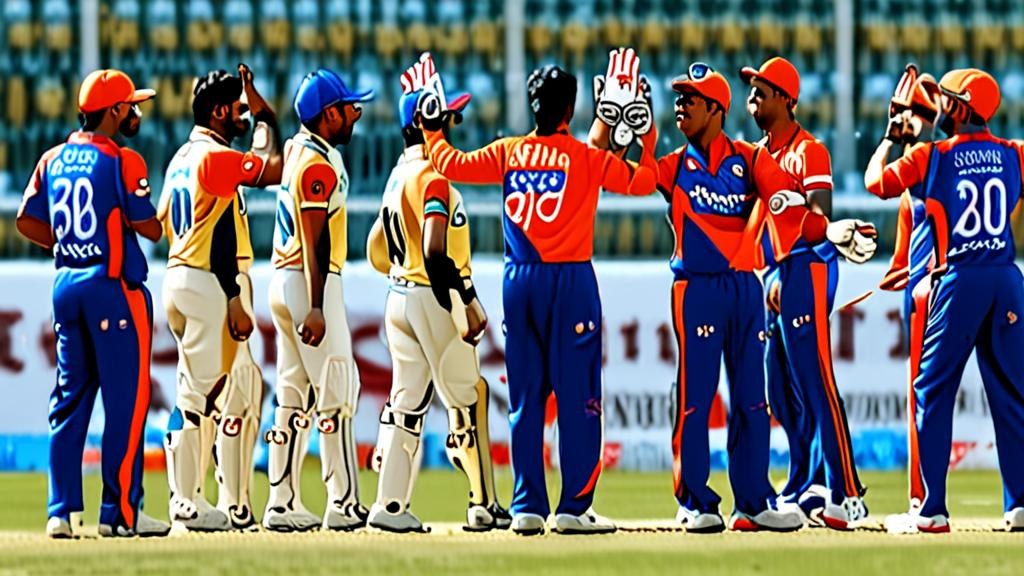

Abhishek Sharma turned the third T20I between India and Afghanistan into his own personal highlight reel on Thursday, producing one of the most explosive innings in the history of international cricket.
The Indian opener smashed a century in just 30 balls at the Arun Jaitley Stadium in New Delhi, helping India crush Afghanistan by 127 runs and complete a 3-0 series sweep. His remarkable innings eventually ended at 108 runs from 34 balls, with nine fours and 11 sixes.
It was not simply another T20 century. Abhishek's assault rewrote India's record books and established a new benchmark for batters from Test-playing nations.

A Century in Just 30 Balls
Abhishek walked out to open India's innings and wasted almost no time finding his rhythm.
His first 50 runs came from just 16 balls. From there, the acceleration became even more extraordinary. He reached his century in the ninth over, needing only 30 deliveries to move from zero to three figures.
Remarkably, 96 of his first 100 runs came in boundaries, showing just how relentlessly he attacked the Afghanistan bowling attack.
His final score of 108 contained nine fours and 11 sixes, meaning 102 of his 108 runs came through boundaries.
That is an extraordinary illustration of the intent with which he approached the innings.
India’s Fastest T20I Century
The innings also saw Abhishek break one of Indian cricket's most notable T20I records.
Before Thursday, Rohit Sharma held India's record for the fastest T20I century, having reached 100 from 35 balls against Sri Lanka in 2017.
Abhishek bettered that mark by five deliveries, bringing up his century from 30 balls.
His effort was also the fastest T20I century by a batter from a full-member nation, surpassing the previous 33-ball efforts of Zimbabwe's Sikandar Raza and New Zealand's Finn Allen.
Only a small number of batters have reached a T20I hundred faster overall. Estonia's Sahil Chauhan holds the overall record with a 27-ball century, while Turkey's Muhammad Fahad has also recorded a 29-ball hundred.
A Historic Powerplay
Perhaps the most astonishing part of Abhishek's innings was how quickly the damage was done.
He scored 76 runs during the first six overs, setting a new record for the highest individual score in the powerplay in a men's T20I.
India as a team reached 100 runs inside the powerplay, their highest-ever total during the first six overs of a men's T20I.
Abhishek and Sanju Samson were responsible for much of that destruction. Samson provided excellent support with a 35-ball fifty, allowing India to maintain an extraordinary scoring rate from the beginning of the innings.
More Than Just Power Hitting
What made Abhishek's innings particularly remarkable was that the aggression did not appear reckless.
The left-hander repeatedly found the boundary and put Afghanistan's bowlers under pressure from the opening overs. His ability to attack different types of deliveries meant Afghanistan had very little room to settle into a defensive plan.
Abhishek has built his T20 game around aggressive intent, but this innings demonstrated how devastating that approach can become when timing, confidence and execution all come together.
Speaking after the match, Abhishek said his approach was based on preparing specifically for the opposition and its bowlers before trying to express himself once the match began. He also credited India's captain and coach for giving him the confidence to play his natural game.
Rashid Khan Ends the Assault
The innings finally came to an end when Afghanistan's premier spinner, Rashid Khan, dismissed Abhishek for 108.
By then, however, the damage had already been done.
Abhishek had propelled India to 164/2 after 13 overs, with India eventually finishing on 221/7 from their 20 overs.
His dismissal was followed by a slowdown in India's scoring rate, but the opening assault had already given the hosts a massive advantage.
Afghanistan Never Recovered
Chasing 222, Afghanistan's innings never developed any real momentum.
India's bowlers reduced them to 47/4 before eventually dismissing them for just 94 in 14.1 overs. Ibrahim Zadran was Afghanistan's top scorer with 25, while Ravi Bishnoi and Nitish Kumar Reddy claimed three wickets apiece.
India therefore completed a commanding 127-run victory and swept the three-match series 3-0.
A Series to Remember
Abhishek's century was not an isolated performance in the series.
He had already scored 82 and 39 in the first two matches, and his explosive 108 in the finale took his series tally to 229 runs.
The consistency combined with the extraordinary strike rate made him one of the defining players of the series.
For India, the performance also comes at an important time as the team continues preparing for major T20 assignments.
The Next Chapter for Abhishek Sharma
At just 26, Abhishek Sharma has already developed a reputation as one of India's most destructive T20 batters.
But the 30-ball century against Afghanistan takes that reputation to another level.
He did not merely score 100 runs quickly. He broke India's fastest T20I century record, set a new powerplay individual scoring record and produced the fastest T20I century by a batter from a full-member nation.
The numbers tell the story, but the manner of the innings tells it even better.
For 30 balls in Delhi, Afghanistan simply could not find a way to stop Abhishek Sharma.
And by the time Rashid Khan finally ended the assault, the Indian opener had already etched his name into the T20I record books.
Opinions here are the writer’s views and do not necessarily reflect those of SportsGuff.
 Unheralded, Unstoppable: How Rasikh Salam Turned the 2026 IPL Final Into His Stage
 Betis Edge Getafe 1-0 as Ezzalzouli Strikes Late in First Half
 Villarreal Fights Back From a Goal Down to Beat Malaga 3-1
 What David Warner Brings to the Nepal Premier League
 Spain Locks In Luis de la Fuente Until 2032, Eyes World Cup Defense
 Home Ground, High Stakes: Why Day 2 Is Make-or-Break for Nepal’s PMGO Hopes
Comments
0Log in to join the conversation.
Writer loginNo comments yet. Be the first to respond.