
One Wide, Two Opinions and a Whole Lot of Drama in Sano
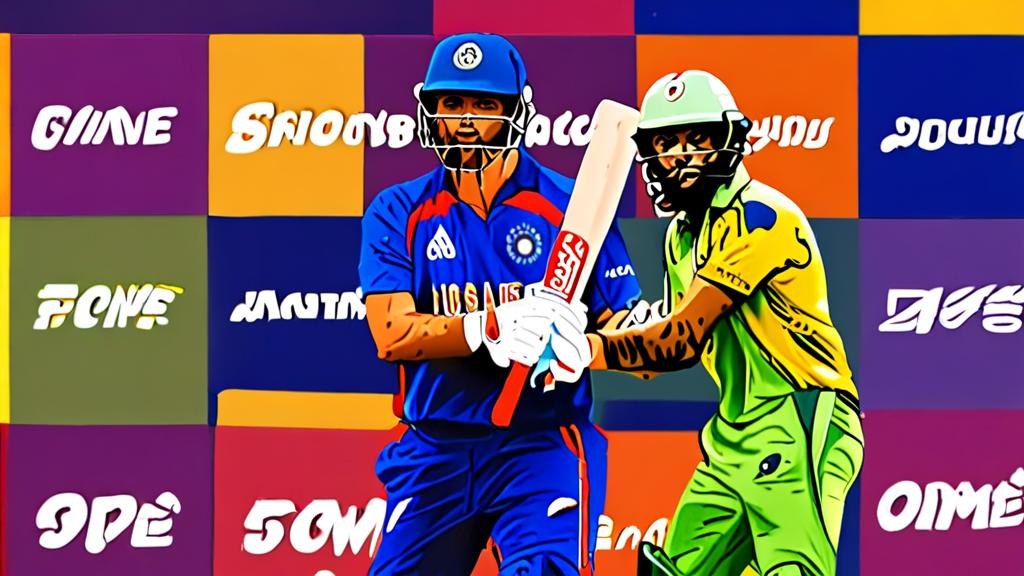

The dynamics and bizarre rules of cricket have always been famous. It was again visible prominently in recent match, when India were facing against Japan in a T20 encounter.
Some wides are clearly wide while some needs a long meeting before everyone decides what just happened. That's what happend at Sano on Tuesday.
It was a 5 over reduced match, with India looking to hold on to only 32 against Japan. Unlike majority of the cricket pandit's anticipation, Japan did their best to restrict mighty Indians to a mere 32. In the final over, Japan needed only 8 runs to beat India. The match wasn't about the rankings, big names, reputations or World Cups at that moment. That was just an additional four balls and eight runs.

Axar Patel was bowling to Alexander Shirai-Patmore as the batsman tried a reverse sweep. The ball was down the leg-side and the umpire signaled it wide.
The consequent ball was also given wide. Suddenly, the match then turned into a courtroom drama. India questioned umpire's decision as the umpires had the discussion about it. The second wide was eventually overturned, and the ball was counted as legal.
The equation then took drastic turn. A run disappeared. More importantly, the ball was also counted.
It was not a small thing when India had subdued her rivals with just 2-run victory in the match. It's what makes for a nice figure—or an uneasy moment.
However, did a misjudgment take place by the umpire?
I believe, in this lies the interest of the debate becoming more than a shout of ‘India got lucky!
You are not wrong if you say that the laws of cricket do not restrict or define a wide from how it moves, over or under, the pitch.
Law 22 takes into account the batter's stance at the time of delivery and if the ball would have been hitting the batter in a regular batting stance.
And it's a big deal when they begin to do things like switch hits and reverse sweeps.
The batter now uses the tactics of changing the cricket field's geometry.
The bowler looks at their stance.
The hitter strikes again and makes another.
It is the umpire's responsibility to determine new “wide” boundaries.
You're not going to get that easy as the ball continues to roll it's way out through the batter and both arms go out.
As matter of fact, the ICC umpire later informed The Indian Express that the delivery which was originally marked “wide” in the first place should not have been called as such as the batter had gone for a reverse sweep.
Well technically speaking, there is a valid rules-based reason to reverse.
There's one more thing I should mention: an umpire may change their decision, if done promptly (with the understanding that that doesn't contradict with the concerned dead ball rules).
So in an interesting way, it was not the changing of the decision that was strange.
What is odd is when and how it happened.
Cricket is not played in a dust, as people often assume.Cricket is not a dust game, as people believe.
Imagine being Japan.
You've worked all evening doing the unthinkable.
India have been scoring their 32 runs.
You've run them down to the last over.
The No. 1 cricketing giant finds itself with a microscope.
You need eight.
The following ball will add a "rental" ball and a new run if the play is a wide.
It's a matter of a few minutes when you suddenly feel like you need 6 from 4!
That is quite a lot for a team whose goal is to achieve an unthinkable come-from-behind victory.
After that, the wide is no longer available.
Return to the previous equation.
Now you're back at the starting point again and must go along as if nothing had ever occurred.
That's the thing that gets me all choked up—it doesn't have to do with the final outcome of the decision being right or wrong—but the drama in a moment when the match was practically inlimbo.
The two on-field umpires took it upon themselves to resolve the issue as there was no TV umpire or DRS on offer for this match.
Maybe that's the Sano lesson, anyway.
The one-run problem
Told it enough times, the run value of cricket seems to be the same value and goes without question.
It doesn't.
It's the same thing as a run scored in the third over of a 20-over game as it is in a chase of five balls remaining at the end of the fifth over. But it is very different psychologically and strategically.
In Sano, the word translated by the wide might have meant:
+1 run
+1 delivery
+1 opportunity
This is a three-for-1 to the batting team.
And, when Japan only fell two runs short of victory at the end, well, that must be the most talked about part of the game.
However, personally, I have one opinion to present:
I don't think that this controversy can be debatable in “India cheated” or “the Umpire saved India”.
That's too easy.
The laws are complicated because they are. Batters move around. Reverse sweeps exist. Switch hits exist. Bowlers adapt. It is up to the umpires to handle them all as they occur.
So I would say here's the thing, I think it looked very bad for the credibility of the decision making process.
If it must be reversed, reverse.
If it doesn't then don't.
So, if a prominent team is openly protesting a decision and this decision is then overturned within seconds, one would certainly have to ask a question, particularly when the match is at stake by runs created in a few seconds.
But it deserved something more than a footnote, and Japan did get it:
But perhaps the biggest pity is all the controversy it caused is besmirching the actual Japanese effort, which was extensive.
They levelled India at the last over.
Played superbly on a tricky pitch.
They boarded a five over scramble and went on to fight the battle with India against one of the world's strongest cricket side in 33.
India finally held up and scored two runs later thanks to the controversial call being reversed which gave Axar Patel only four runs on the remaining three balls.
This should be kept in mind as well.
Actually, the funniest thing about cricket is:
India had set the target on Sano's five overs.
Instead, they got to play five of politics, mathematics, geometry, law and psychology - with a cricket ball somewhere in the middle.
And Japan?
They came within two runs of making everyone forget about the rankings altogether.
Maybe that is the real story of Sano.
Not the wide.
The fact that, for a few minutes, nobody in the stadium seemed to know whether the ball was wide—but everybody knew the match was.
Opinions here are the writer’s views and do not necessarily reflect those of SportsGuff.
 India Survives Scare as Spirited Japan Pushes Giants to the Brink in Historic T20I Thriller
 Bhutan's Cricket Team Lands in Pokhara to Prep for T20 World Cup Qualifier
 The Deserved Humbling Real Madrid needed in the Derby
 16 Teams, One Trophy: T-10 Cricket Fest Begins in Dhangadhi Today
 Isak's Decisive Strike Seals Narrow Victory for Liverpool Over Resilient Bournemouth
 BCCI Considering India vs World XI Match for 100th Anniversary Celebrations in 2028
Comments
0Log in to join the conversation.
Writer loginNo comments yet. Be the first to respond.