
Nepali Football at a Crossroads: What Does the Future Hold After the ANFA Crisis?
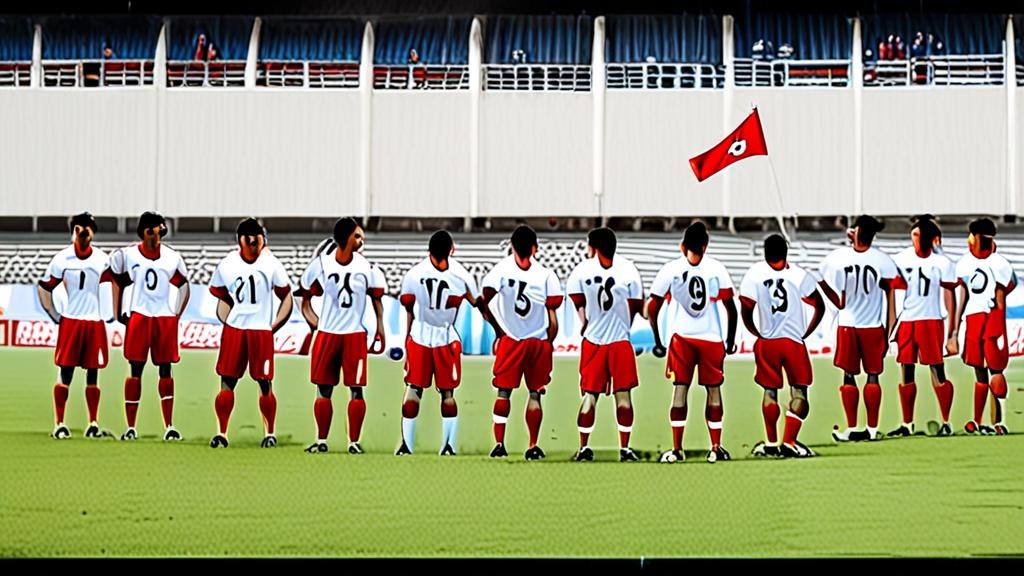
Football holds a special place in Nepali sporting culture, whether it's on the school field or at local tournaments, or in the packed stadiums, or with the supporters cheering for the national team. The young players aspire to represent Nepal, the clubs have garnered generations of supporters and the national team continues to be a proud symbol of football fans across Nepal.
However, Nepal's football is in crisis in 2026, and its problems are not just on the field.
The ANFA is still suspended by the FIFA due to a standoff with the NSC. The incident started out as a domestic dispute involving the internal affairs of ANFA, and has since escalated to an issue that has impacted Nepal's involvement in international football.

In the eyes of players and supporters, there are far more serious implications.
How did Nepali football reach this point?
The conflict started when the National Sports Council on 25 March 2026 suspended the executive committee of ANFA. The main issue at stake in the controversy was ANFA's electoral procedures, specifically, the issue of conducting internal elections. This led to a major issue where the NSC intervened in the affairs of the football associations, where they are expected to run their affairs without government interference in their affairs. The conflict lasted for months, each side having different viewpoints about what should happen.
The government has insisted that it is working with FIFA to come up with a solution. Representatives of the government have also said that the suspension of FIFA should be looked at in the context of the actions of the present government. However, FIFA made its decision.
On June 24, 2026, FIFA suspended ANFA without any explanations for third-party interference.
What does the FIFA suspension mean?
The suspension has repercussions for Nepali football. As long as the suspension lasts, the national teams and Nepali clubs are not eligible to enter FIFA/AFC competitions. This implies the problem is not restraining to ANFA leaders or the government.
It has direct impacts on those who rely on the international competitions for experience and exposure, clubs looking forward to compete in the international arena, coaches who are working with the national team and those who are waiting to see Nepal's national team.
The suspension also impacts access to FIFA and AFC funding and programmes for development. The loss of access to international development support can have repercussions beyond one season for a football association that already has limited resources for developing the sport in its country.
What needs to happen for the suspension to end?
The road to removal of suspension is linked tightly with the initial controversy. One of the major conditions is the complete lifting of the suspension of the executive committee of ANFA by the NSC and granting ANFA the autonomy to complete its electoral process. The conflict must return to a process which is regarded by FIFA as independent, in simple terms.
This makes the following stage very crucial. The question now is no longer just who is the winner and who is the loser between ANFA and the NSC. A bigger question is how Nepal can rebuild the stable football administration without involving the national teams, clubs and players in another institutional conflict.
The biggest losers could be the players
The arguments that occur between the administration and players are not on the ground. They do not, however, have consequences. A professional footballer's career relies on regular matches, contracts, training, competition and opportunities to enhance. This is a loss of playing time to the player when there is a disruption to competitions. Young footballers are especially at risk.
There has to be a clear pathway for a player transitioning from youth football to the senior game:
Academy -> Youth competition -> Club football -> National team -> International opportunity
Loss of one component of that pathway means the development slows down. Hence, the issue of the ANFA crisis should not be addressed solely from a governance perspective. It also is a player development concern.
Domestic football needs stability
The FIFA ban comes on the heels of Nepal's domestic football system being marred by several disruptions. The nation's premier domestic league, the Martyr's Memorial A Division League, has had problems with consistency. An unpredictable calendar is not conducive to establishing viable teams and professional careers for players and clubs. The international camps are not the only way to build a good national team. It requires solid home base.
There is a need for competitive matches to be played throughout the year. There is a need for regular competitions for coaches to identify and develop talent. Clubs must have consistent calendars to help attract sponsorship and develop commercial relationships.
There's another very simple thing that needs to happen for supporters:
football to watch.
Any time a professional football ecosystem relies on occasional competitions it is not a functioning system.
Youth football is the start of the future
But perhaps the biggest one for Nepal is what will happen to today's top squad. It's how the kids who would be the players on tomorrow's national-team get on. There are plenty of young football talents in Nepal. The issue is providing them with a right developmental track.
A long-term system should be able to be connected:
Grassroots football => School football => Academies => U-13 / U-15 / U-17 / U-20 competitions => Professional clubs => National team
That system should reach beyond Kathmandu as well.
Talent can be found in all parts of Nepal, and scouting and development should be done across the various parts of the country and not rely heavily on a limited number of established scouting and development centres. But growing players is more than providing them with a pitch. They require competent coaches, frequent practice sessions, nutrition, medical care, strength and conditioning training and recovery areas and suitable competition at every age. The players at present 12 or 13 years old may be the players which Nepal will rely on in international level 10 years from now.
Nepal needs stronger clubs
The health of the clubs is also crucial for the future of Nepali football. Identity, history and supporters are offered with traditional clubs. There is a new model that has been introduced in Nepal with the franchise-based competitions — Nepal Super League, which focuses on commercialisation, marketing and entertainment. These models should not be considered as competing with one another but can be adopted in Nepal to develop the sport. A long-term player-development structure can be provided through the traditional club football.
Greater sponsorship, broadcast and audience engagement can be achieved through commercial competitions. However, without a solid football calendar, neither model will be effective. Clubs should await the time of their match.
Players must be aware of when they are on for pay. Sponsors need to know what they are investing in. Supporters need to know when their team will take the field.
Women's football must be part of the plan
Nepal's football future cannot be measured only through the men's national team.
Women's football has developed its own following and produced players who have represented Nepal internationally.
The same principles apply here: regular domestic competition, youth development, coaching, facilities, professional opportunities and international exposure are essential for sustained progress.
If Nepal wants to build a genuine football system, women's football has to be part of that system rather than treated as an afterthought.
The ANFA crisis has raised a bigger question
The current situation has forced Nepali football to confront a question that goes beyond the immediate FIFA suspension:
What kind of football administration does Nepal actually need?
- It needs an administration capable of running competitions consistently.
- It needs a governance structure that can operate within FIFA's requirements while remaining accountable.
- It needs clubs that can become financially sustainable.
- It needs youth competitions that run regularly.
- It needs professional coaching and player-development programmes.
- It needs better infrastructure.
- it needs a long-term national-team strategy that survives changes in individual officials, coaches and administrations.
The solution to Nepali football's problems cannot be one new tournament or one new generation of players. It has to be systemic.
2030 and beyond
If Nepal wants to make meaningful progress over the next decade, the priorities are relatively clear.
- A stable domestic calendar.
- Strong A, B and C divisions.
- Consistent youth competitions.
- Regional academies.
- Better coaching education.
- Professional club licensing.
- Improved training facilities.
- Sports science and medical support.
- A sustainable women's football structure.
- More opportunities for Nepali players abroad.
- And, above all, stable and accountable football governance.
The FIFA suspension may eventually be resolved.
But simply returning to the situation that existed before the suspension would not necessarily solve the deeper problems. Nepali football needs to use this moment to ask what kind of football system it wants to have in five or ten years.
The passion is already there
Nepal does not need to create a football culture. It already exists. Children are playing the game. Supporters are following their clubs. Young players are dreaming of the national shirt.
The challenge is turning that passion into a system capable of developing players and sustaining professional football. The ANFA crisis has shown how quickly problems at the administrative level can spread across the entire football ecosystem. But it has also created an opportunity to rethink the future. The future of Nepali football should not depend on one administrator, one coach, one generation or one tournament.
It should depend on a system. A system where players can develop, clubs can survive, leagues can run, supporters can watch and the national team can compete consistently. For Nepal, the question in 2026 is therefore not whether people still love football. They clearly do.
The real question is whether Nepali football can finally build a system worthy of that passion.
Opinions here are the writer’s views and do not necessarily reflect those of SportsGuff.
 Nepal Premier League Season 3 Schedule Unveiled: Lumbini and Sudurpaschim to Ignite Opening Battle
 UEFA Nations League 2026: Why the Defending Champions Won't Win It Again
 Root Rewrites English ODI History at Home, But Tendulkar's Global Apex Remains Distant
 Kiwi All-Rounder Rachin Ravindra Suffers Shoulder Injury, India T20I Series Spot Uncertain
 Football Returns To Palestine After Three Years, Named For 1,014 Fallen Players
 Bhutan's Cricket Team Lands in Pokhara to Prep for T20 World Cup Qualifier
Comments
0Log in to join the conversation.
Writer loginNo comments yet. Be the first to respond.